
Last updated October 31, 2026
 Home additions & ADU
 Kitchen remodeling
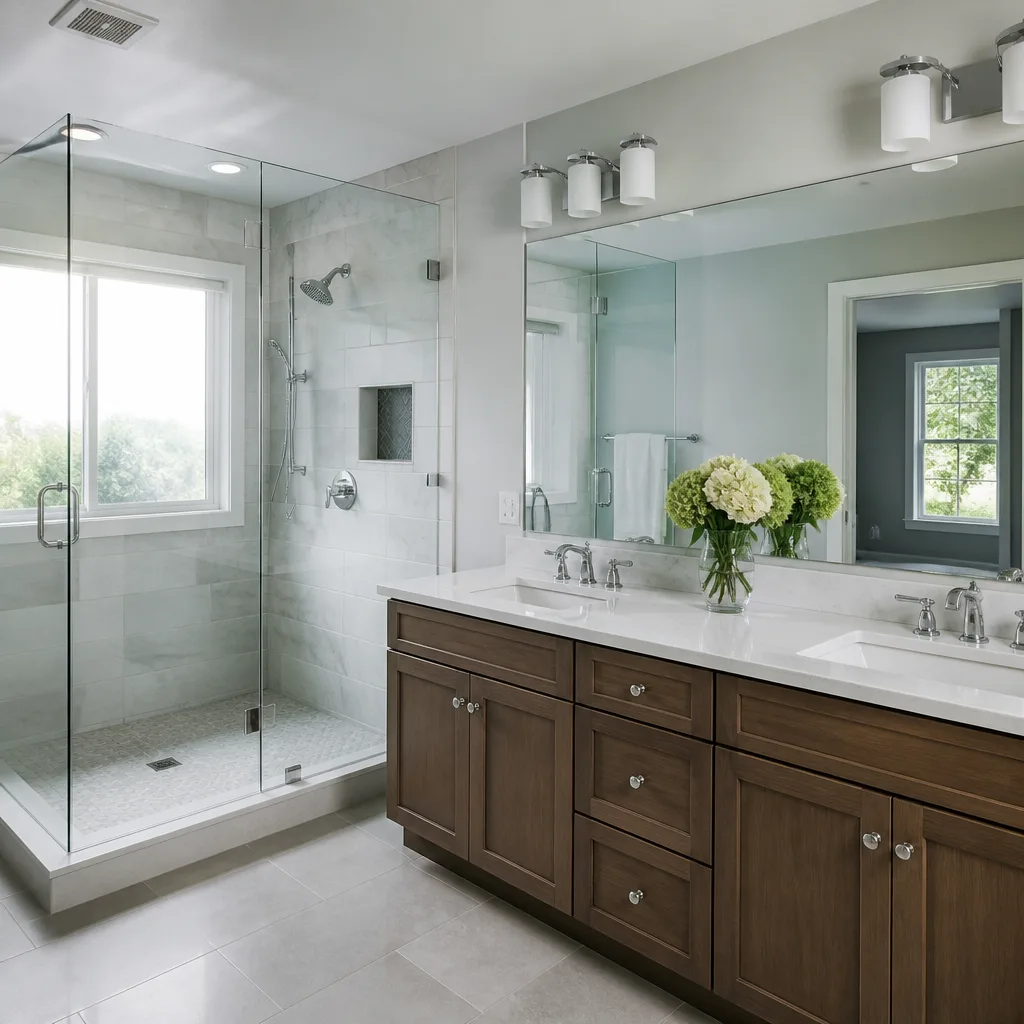 Bathroom remodeling
 Roofing
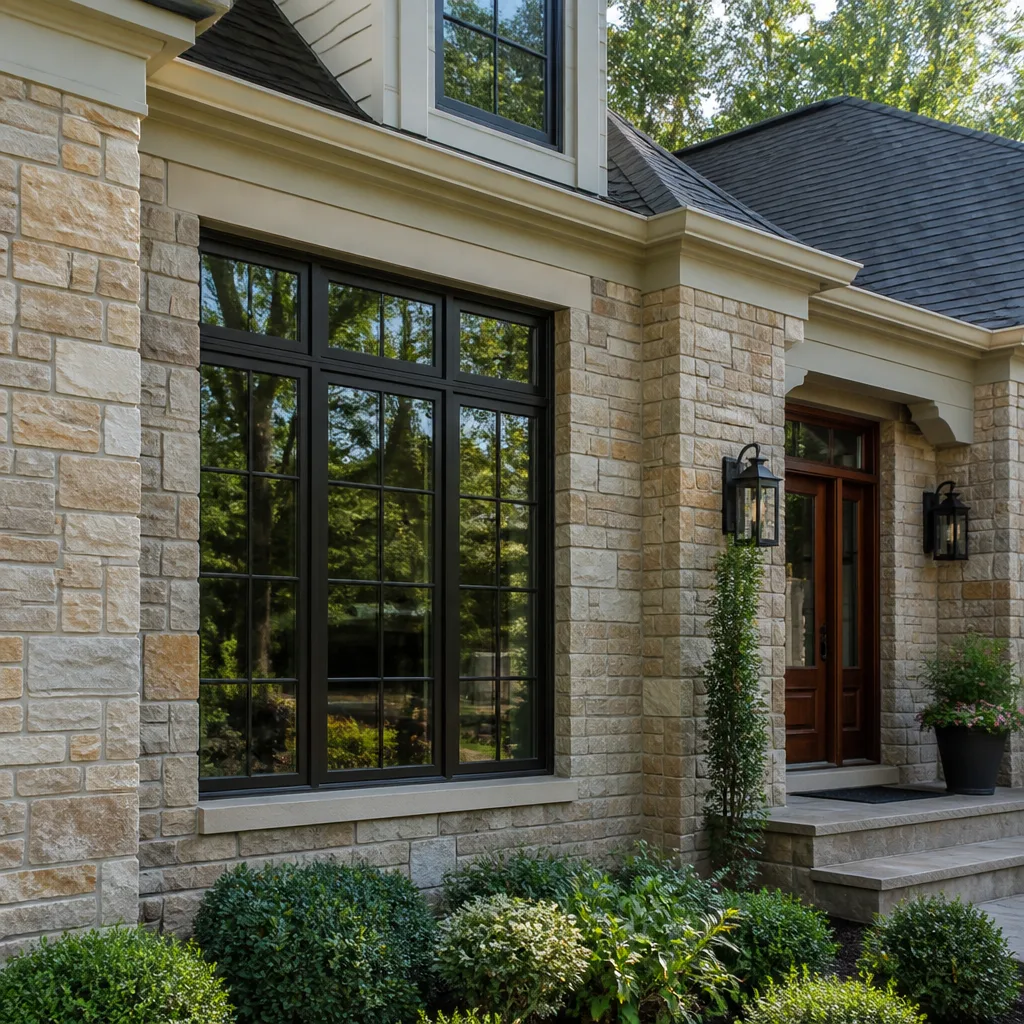 Windows & doors
 Driveway & pavers
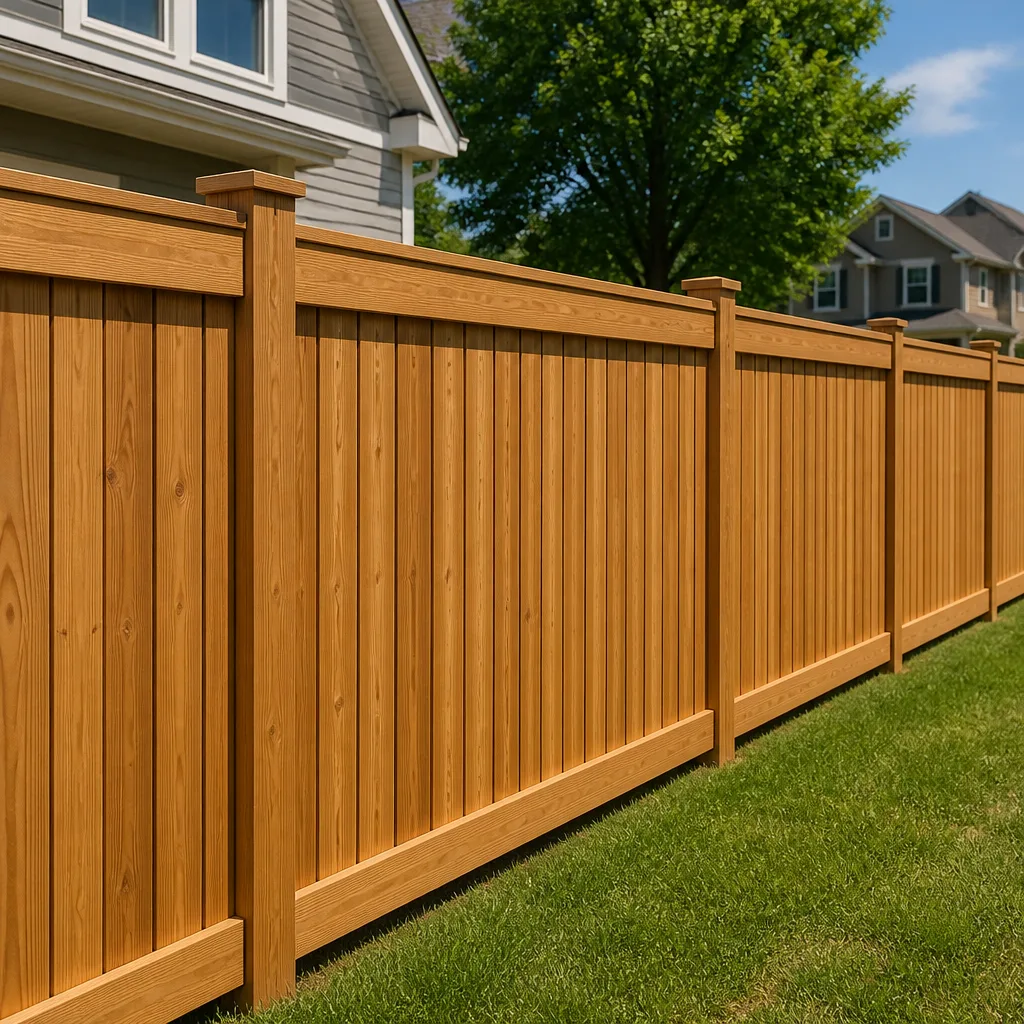 Fence
Free written scope consultation - allowances, timeline, and change-order rules on paper before a single trade is scheduled
Seasonal Construction Care for Westminster: Year-Round Homeowner’s Guide
Westminster, California gets about 13 inches of rain per year, and nearly all of it falls between December and March. That sounds forgiving until you understand the failure pattern it creates: months of dry heat that slowly shrink caulk, crack stucco, and loosen flashing, followed by 90 days of steady moisture that works its way into every compromised seam. This guide—along with The Complete Guide to Construction in Westminster—explains what actually fails on Westminster homes, when to catch it, and which fixes pay for themselves. We’ll walk through the pre-rain checklist, summer heat realities for older homes, drainage interpretation after heavy storms, and the spring inspection sequence that catches damage before it spreads.
Styles & brands we work with
Quick Answer
Seasonal home care in Westminster means timing maintenance around a dry summer and a wet, mild winter. The most important tasks are: a full exterior penetration check every October, targeted heat management for homes built before current attic insulation codes, post-rain drainage observation from December through March, and a structured spring inspection of stucco, fascia, and crawl spaces. Done consistently, these four seasonal passes prevent most of the costly repair work we see in Westminster.
Table of Contents
- The October Pre-Wet-Season Checklist for Westminster Homes
- Summer Heat and Westminster’s Under-Insulated Older Homes
- How to Read Your Home’s Drainage After the First Heavy Rain
- Spring Post-Rain Inspection: What to Look For and When
- Why Westminster’s Mild Winters Still Demand HVAC Service
- Stucco, Fascia, and Crawl Spaces: Westminster’s Three Overlooked Systems
- Material Choices That Reduce Seasonal Maintenance in Westminster
- Common Mistakes to Avoid
- When to Call a Professional
- Frequently Asked Questions
- The Bottom Line
The October Pre-Wet-Season Checklist for Westminster Homes
October is the month that determines whether your Westminster home sails through the rainy season or absorbs slow, invisible damage. The goal is simple: close every penetration before the first storm. In our work as a general contractor in Westminster, we consistently see the same three failure points on local homes, so start there.
Flat roof drains. Many Westminster homes, particularly those built in the 1960s and 1970s, have flat or very low-slope roof sections. These roofs don’t fail because of shingle loss; they fail because debris clogs the internal drains or scupper openings. A single clogged drain lets water pond, and ponding water finds every seam. Check every drain and scupper in October, clear them by hand, and look for standing water after the first rain. If water stands for more than 48 hours, the roof’s slope or drainage needs professional attention before the wet season deepens.
Stucco cracks at window and door frames. Westminster’s older homes are overwhelmingly stucco-clad. Stucco is durable, but it moves, and the joints where stucco meets window frames, door frames, and utility penetrations are where hairline cracks form over summer. These cracks look cosmetic in October. By February, they’re channels for water to reach framing. Seal any crack wider than a hairline with a quality exterior caulk rated for stucco. Pay special attention to south-facing and west-facing walls, which take the most sun and show the most movement.
Garage-to-house threshold sealing. The door between your garage and your home is a penetration most people never think about. In Westminster, where many garages sit slightly below grade, a failed threshold seal lets water wick under the door and into the wall cavity after every storm. Check the door sweep, the threshold seal, and the weatherstripping. This is a $30 fix that prevents thousands in hidden wall damage.
October Checklist in Order
- Clear and test all flat roof drains and scuppers
- Walk the entire exterior and seal every stucco crack wider than a hairline
- Check the garage-to-house door threshold, sweep, and weatherstripping
- Inspect all window and door caulking for gaps, cracks, or shrinkage
- Clear gutters and downspouts, and confirm downspouts extend at least 4 feet from the foundation
- Test the sump pump if your home has one, and check the crawl space for existing moisture
This checklist takes about four hours on a typical Westminster home. Skipping it means gambling on the condition of your exterior envelope, and in our experience, the homes that develop wet-season problems are almost always the ones that skipped October.
Summer Heat and Westminster’s Under-Insulated Older Homes
Westminster’s summer temperatures regularly climb into the 80s and 90s, yet many local homes built before the 1980s have attic insulation values far below what current building codes require. These homes heat up fast, release that heat slowly at night, and force air conditioners to run far harder than they should. The question we hear most from clients planning a home remodeling project in Westminster is: what’s actually worth upgrading?
The honest answer is that attic insulation upgrades are almost always worth it, but not every summer heat problem is an insulation problem. Before you invest, understand where your home is actually losing its cool.
Attic insulation. Most Westminster homes have somewhere between R-19 and R-30 in the attic when current standards recommend R-38 or higher. Upgrading attic insulation is one of the highest-return improvements you can make, and it’s a component we regularly scope as part of full-home renovation work. If your home has the original fiberglass batts from the Nixon era, you’re paying for that every August.
Radiant barriers. These are reflective foils installed under the roof deck, and they make a measurable difference in Westminster’s climate because they reject solar heat before it enters the attic. They’re not a substitute for insulation, but they’re a worthwhile add-on if you’re already having roofing work done.
What’s not worth upgrading. We occasionally meet homeowners who want to replace windows solely to reduce summer heat gain. If your windows are original single-pane from the 1960s or 1970s, replacement windows are a legitimate improvement, but they’re also the most expensive way to make a marginal comfort difference. Upgrade insulation first, consider a radiant barrier if you’re roofing, and only then evaluate windows. This sequencing maximizes return, and it’s exactly the kind of scoping we do for homeowners who want one contractor managing every system rather than piecemeal fixes. If you’re evaluating builders, Choosing the Right Construction Brand: A Buyer’s Guide for Westminster can help.
How to Read Your Home’s Drainage After the First Heavy Rain
The first meaningful storm of the season is the single most informative day in a Westminster homeowner’s year. It reveals exactly what your grading, drainage, and hardscaping are doing with water, and standing water patterns after that storm are the earliest warnings of foundation and slab problems years down the line.
During and immediately after the first heavy rain, walk the entire perimeter of your home and note where water pools. Use this guide to interpret what you see.
Water pooling against the foundation. This is the most serious drainage failure and the one we see most often in older Westminster neighborhoods where original grading has settled. Water against the foundation means water under the slab eventually. The fix is typically regrading the affected area so it slopes away at a minimum of 6 inches over 10 feet, and in stubborn cases, installing a French drain or surface drain to move water out.
Water pooling in the middle of the yard. This is less urgent than foundation pooling but still worth addressing. Persistent yard pooling often indicates compacted soil or a high water table in certain Westminster areas. The practical fix is usually a dry well, a rain garden, or re-sloping the lawn.
Water running toward the house from hardscaping. Pavers, concrete patios, and walkways installed without proper slope sometimes direct water at exactly the wrong thing. Hardscaping slope can often be corrected without full replacement, but it’s a job that requires a contractor who understands drainage behavior, not just a paver installer. When we scope outdoor projects for home renovation clients in Westminster, drainage is part of the conversation from day one because it’s cheaper to build it right than to fix it later.
Water seeping under the garage door. If water enters the garage during or after a heavy rain, the driveway slope has flattened over time, the garage door seal is worn, or both. This is another contributor to slab and wall moisture problems, and it deserves attention before the next storm.
The pattern to remember: water that pools and drains within a few hours is often manageable. Water that stands for 24 hours or longer after rain stops is a signal that your soil isn’t draining and your drainage plan isn’t working.
Spring Post-Rain Inspection: What to Look For and When
The window between the last heavy rain and the onset of summer heat is when wet-season damage is cheapest and easiest to repair. By April in Westminster, the soil is drying, but the moisture damage done between December and March is still visible. Here’s what to inspect and when.
Stucco surfaces. Walk every wall and look for staining, bubbling, or efflorescence (the white, chalky residue that appears when water moves through masonry). These are the telltale signs that water penetrated the stucco during the wet season. Small areas can be repaired with fresh stucco patch, but be honest with yourself: if staining is widespread or near structural corners, get a professional assessment before the next winter. We’ve seen extensive hidden damage behind stucco that looked only lightly stained from the outside.
Fascia boards. The fascia is the horizontal board that runs along the roof edge, and it’s the first exterior wood component to rot in Westminster’s climate because it’s directly exposed to every rain. Look for soft spots, peeling paint, or wood that gives when pressed. Rotted fascia is not just a cosmetic problem; it weakens the gutter attachment and invites pests. Replacement is straightforward and inexpensive if caught early.
Crawl spaces. After the wet season ends, go under the house or have a professional do it. What you’re looking for: standing water, mud on the vapor barrier, water stains on piers or framing, and any musty odor that signals mold or wood rot. Westminster homes built with raised foundations are particularly vulnerable to crawl space moisture because winter rains saturate the soil directly beneath the subfloor. Dry it out, fix the moisture source, and you’ve prevented a cascade of bigger problems.
Timing matters. Do this inspection in April. By May, the heat is arriving and some moisture staining fades or gets hidden by summer growth. The simplest way to remember: inspect as the jacarandas bloom, which is also when the wet season has definitively ended in Westminster.
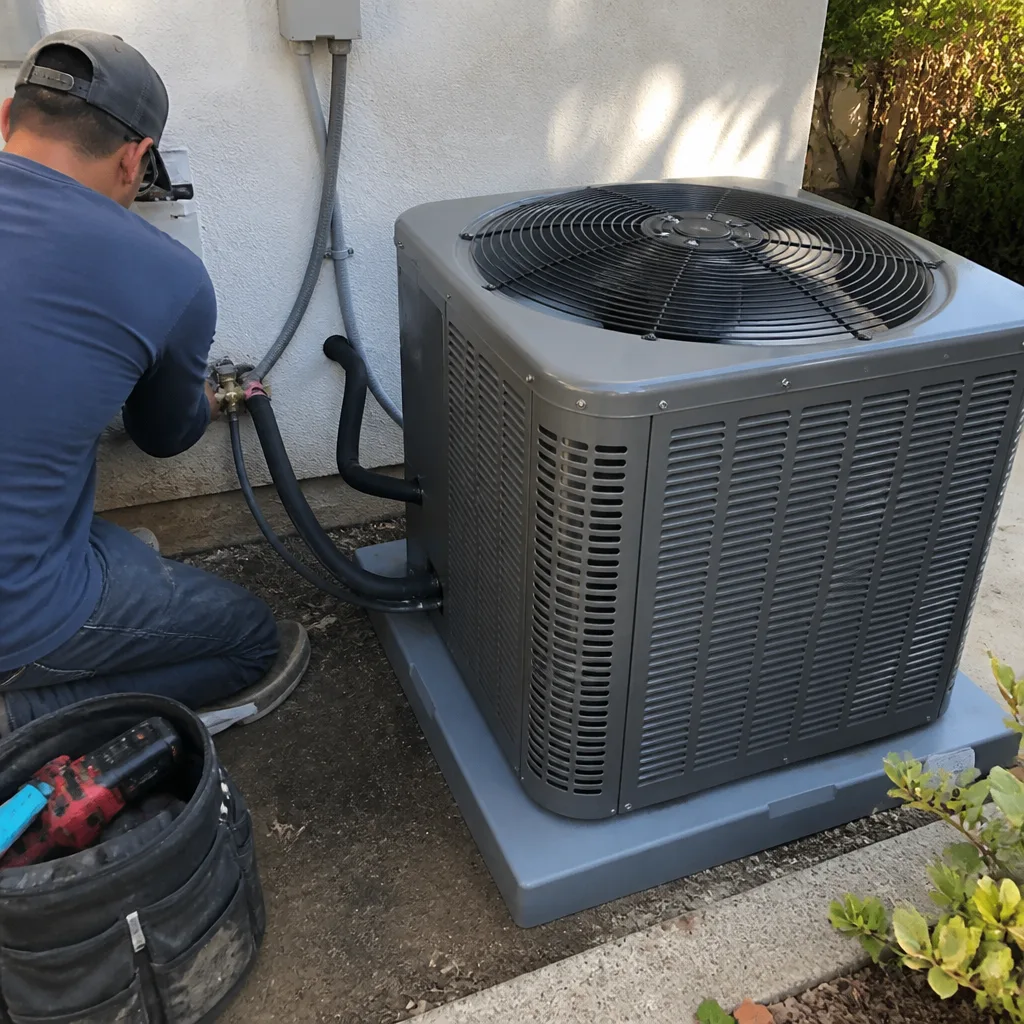
Why Westminster’s Mild Winters Still Demand HVAC Seasonal Service
Westminster’s winter temperatures are mild enough that furnaces and heat pumps often sit mostly unused from November through March. That’s not good for them, and the failure mode is predictable: rubber seals and belts dry out, dust settles into components, and the first sustained heat wave in June or July forces a system that has been dormant for months to run at full load. The result is exactly what you’d expect: the system fails on the hottest day of the year.
The practical recommendation is an HVAC service check in early May, before summer demand spikes. This should include filter replacement, coil inspection, refrigerant check if applicable, and a full system run test. It’s the best defense against a July breakdown, and it’s a task that’s easy to overlook precisely because Westminster winters are so mild that the system seems fine for months.
For homeowners who are already planning a remodel that involves opening walls or changing room layouts, this is also the right moment to evaluate whether your HVAC system is correctly sized for your home’s actual cooling load. Many Westminster homes still run on equipment that was sized decades ago, before insulation upgrades, window replacements, or additions. A system that’s too large short-cycles, wastes energy, and wears out faster. A system that’s too small can’t keep up. Either way, if a renovation is on your horizon, HVAC evaluation belongs in the scope conversation from the beginning.
Stucco, Fascia, and Crawl Spaces: Westminster’s Three Overlooked Systems
Most Westminster homeowners know to check their roof and clean their gutters. Far fewer pay attention to the three systems that quietly fail in our specific climate: stucco cladding, fascia boards, and crawl spaces. These three matter more in Westminster than they do in most of the country.
Stucco cladding. The vast majority of homes in Westminster are stucco-clad, and stucco has a specific weakness in our climate. It handles heat well, but it does not handle movement well, and our dry summers create movement. Soil dries and contracts, foundations shift fractions of an inch, and stucco cracks. Those cracks are not structural problems on day one, but they’re water entry points on day 90 of the wet season. The discipline that prevents damage is a yearly exterior walk, sealing cracks as soon as they exceed a hairline width.
Fascia boards. Fascia is the most exposed wood on a Westminster home, and our winter rain pattern is specifically hard on it. Light, steady rain is actually more damaging to fascia than heavy downpours because it keeps wood damp for extended periods. Once fascia begins to rot, it compromises gutter attachment, and then the gutter problem becomes a fascia problem becomes a water-around-the-foundation problem. The chain reaction is preventable with a simple yearly inspection.
Crawl spaces. Homes on raised foundations in Westminster have crawl spaces that sit directly above soil that stays damp for months after the wet season. If your vapor barrier is torn, missing, or not properly overlapped, that moisture migrates up into framing, insulation, and ultimately your living space. The fix is not glamorous, but it’s simple: a proper vapor barrier, adequate crawl space ventilation, and confirming that gutters and downspouts are directing water away from the foundation perimeter. In our work on Westminster renovation projects, we routinely find crawl space moisture that has been present for years and was only discovered because a larger remodel exposed it.
These three systems share a common trait: they’re out of sight, they fail slowly, and their failures are expensive to remediate once they reach a certain point. That’s exactly why seasonal attention pays off.
Material Choices That Reduce Seasonal Maintenance in Westminster
One of the most practical ways to reduce your seasonal maintenance burden in Westminster is to choose materials that are specifically suited to our climate. If you’re planning a remodel, replacement, or addition, material selection is where durability gets built in.
Fiber cement siding. For Westminster homeowners replacing exterior cladding, James Hardie fiber cement is an option we spec frequently because it resists both sun damage and moisture intrusion, the two forces that define our climate. It’s more expensive than vinyl and more involved to install than basic wood, but it’s engineered for exactly the conditions we live with.
Composite and vinyl fencing. Traditional wood fencing in Westminster weathers fast: sun bleaches it, rain warps it, and it needs re-staining or replacement far sooner than homeowners expect. Composite and vinyl fencing products from brands like Bufftech and ActiveYards hold up significantly better in our climate, and they’re options we can source for fencing projects.
Metal and composite hardscaping. For patios, walkways, and retaining walls, Belgard and Unilock products offer the durability Westminster’s climate rewards. These materials drain well, resist sun fading, and typically require less seasonal attention than poured concrete or basic wood structures.
The principle to remember. In Westminster, the cheapest material is rarely the cheapest over ten years. Our sunshine and our wet season are both gentle compared to most of the country, but they work together to degrade materials that were specified for a different climate. If you’re spending money on an exterior improvement, spec for Westminster specifically.
Common Mistakes to Avoid
- Skipping the October walk because “it hardly rains here.” Westminster’s low annual rainfall creates exactly the complacency that lets small problems grow undetected. The 13 inches we get annually are concentrated enough to exploit every unsealed penetration, and we see the results every spring in homes whose owners assumed mild weather meant no maintenance.
- Sealing stucco cracks with interior caulk. Interior caulk is not formulated for exterior stucco’s expansion and contraction, and it fails within a season. Use an exterior-grade sealant designed for masonry and stucco, or the fix won’t last.
- Ignoring standing water because it “drains eventually.” Water that stands for 24 hours or more is telling you something about your soil, your grading, or both. Ignoring it means accepting a slow march toward slab and foundation issues.
- Waiting until summer to service HVAC. By the time the first heat wave hits, HVAC techs are booked out, and your system is being asked to perform at full load after months of idleness. Schedule the check in May, not July.
- Replacing windows before upgrading attic insulation. This is the most common sequencing mistake we see in Westminster. Attic insulation is a fraction of the cost of window replacement and delivers a bigger comfort and efficiency improvement for most older homes.
- Treating fascia rot as a paint problem. If the wood is soft, the problem is deeper than paint. Painting over rotted fascia simply hides the issue for a season while the underlying decay continues.
- Assuming crawl space dampness is normal in Westminster. It’s common, but it’s not normal. Damp crawl spaces in our climate indicate a fixable drainage or barrier problem, and ignoring them invites structural and air quality issues.
When to Call a Professional
Some seasonal maintenance tasks are straightforward DIY work; others require a trained eye and the right equipment. Call a professional when you see: water pooling against your foundation that persists after grading adjustments, stucco staining that’s widespread or accompanied by visible structural cracks, fascia rot that extends beyond a single replaceable board, crawl space moisture you can’t attribute to a specific source, or any roof leak that involves the underlayment rather than a visible shingle. These are the situations where a wrong diagnosis costs more than the professional assessment. Square One Builders offers free estimates in Westminster – call (877) 688-9930 to schedule yours.
Frequently Asked Questions
Twice a year minimum: a thorough October pre-rain check and a thorough April post-rain inspection. Westminster’s climate means your home needs less frequent intervention than homes in harsher climates, but the two seasonal passes matter because our wet season packs all its precipitation into a few months. Call (877) 688-9930 if you want help structuring your seasonal checklist around your specific home.
Water intrusion through stucco cracks and failed seals is the most common seasonal damage we see. Westminster homes built in the 1960s and 1970s have exterior envelopes that were not designed for decades of sun-driven expansion and contraction, and the cracks that form become water channels during the wet season.
For the basic October and April checks done yourself, expect to spend $100-$300 per year on caulk, weatherstripping, drain clearing, and filter replacement. If you hire a contractor for a full seasonal inspection and minor repairs, a typical Westminster home runs $500-$1,000 per visit depending on what’s found. For an exact quote on your home, call (877) 688-9930 – estimates are free.
You can, but you shouldn’t. Deferred maintenance that accumulates before a remodel often becomes a change order once work begins. The better approach is to keep up with seasonal basics so your remodel scope stays focused on what you actually want, not on remediating damage that could have been prevented.
Yes, and it’s precisely because you barely use it in winter that the service matters. Systems that idle for months and then spike to full load in summer are the ones most likely to fail at the worst possible moment. A May service check is the cheapest insurance against a July breakdown.
Not necessarily, but it’s a warning sign. Water that pools against the foundation and stands for 24 hours or more is a problem that will eventually affect the slab or foundation. Water that pools in the middle of the yard is less urgent but still worth addressing to prevent soil saturation and mosquito breeding. Either way, the pattern tells you what your drainage is doing, and reading it correctly is the first step toward fixing it.
The Bottom Line
Westminster’s mild climate is both a blessing and a trap. It’s a blessing because our homes don’t face the brutal freezes, heavy snow loads, or extreme heat of most of the country. It’s a trap because that mildness lets homeowners defer maintenance until small problems become structural ones. The discipline that protects your home is simple: a full October exterior check, a May HVAC service, a drainage observation every time the rains come, and an April inspection that catches damage while it’s still cheap to fix. Do these four things every year, and your Westminster home will deliver decades of dependable service. For more guides & resources, visit our blog.
Written by the team at Square One Builders, serving Westminster since 2014.
See the difference
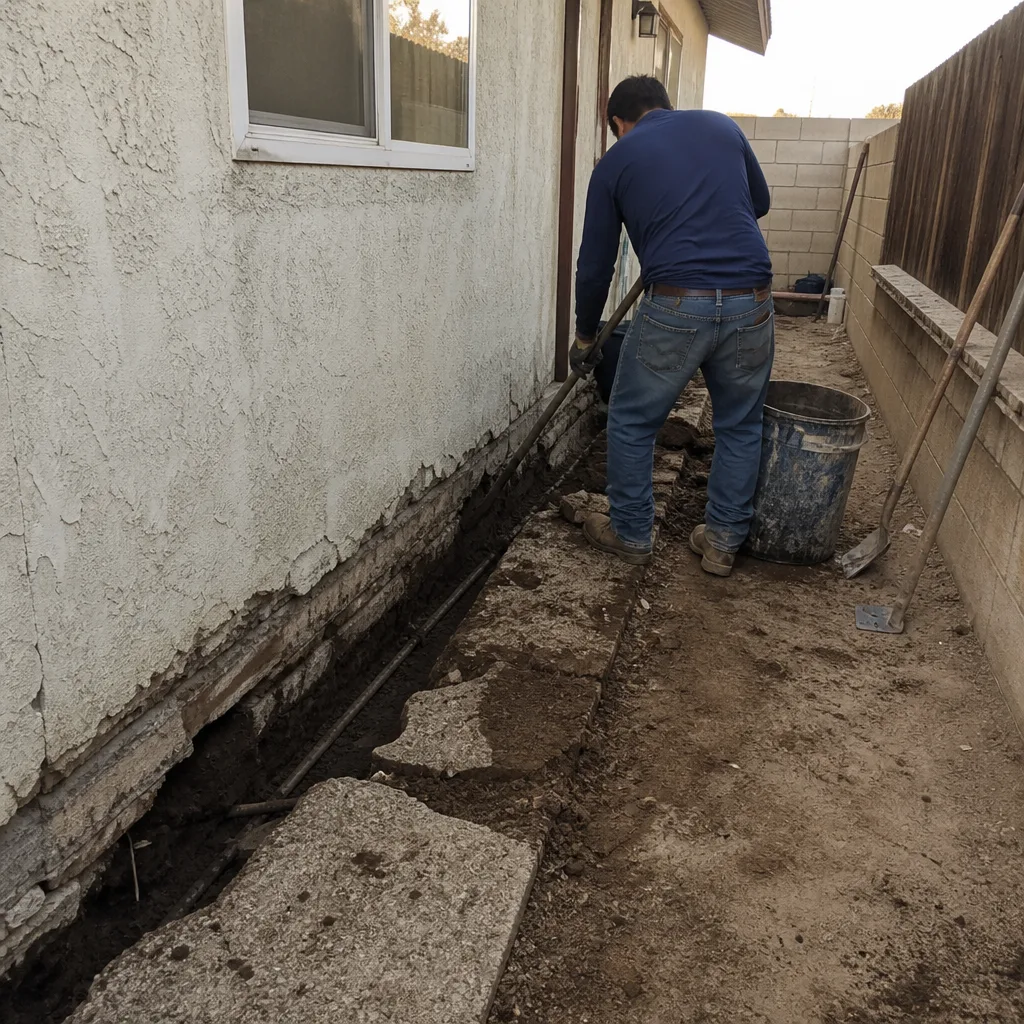 Before
 After
 Before
 After
 Before
 After